
Managed IT
Business Email Hosting in Oman: Professional Email on Your Own Domain
Packages
Setup
From 120 OMR/ one-time
- Email set up on your own domain
- Migration from your current email
- SPF, DKIM and DMARC configured
Per mailbox
From 1.5 OMR/ per mailbox / month
- Hosted mailbox management
- Two-step sign-in and filtering
- Microsoft 365 or Workspace license extra
Overview
Your name in the inbox, not a free address
When a customer sees an email from yourcompany@gmail.com or an old hotmail.com address, it quietly tells them the business is small or not quite established. A quote, an invoice, the first reply to a new lead: all of it carries more weight coming from you@yourcompany.com. Professional email on your own domain is one of the cheapest ways a business in Oman looks the part it already plays.
There is a second problem with a free address, and it matters more. You do not control it. It usually sits under one person's personal login, tied to their phone number and their recovery email. When that person leaves, or the account gets locked, the business can lose the address it has printed on every card and every sign. Email on a domain you own belongs to the company, not to whoever happened to set it up.
BudTech sets up and runs business email on your own domain, so your team sends and receives from names that match your brand, and the company keeps the keys.
What email on your own domain gives you
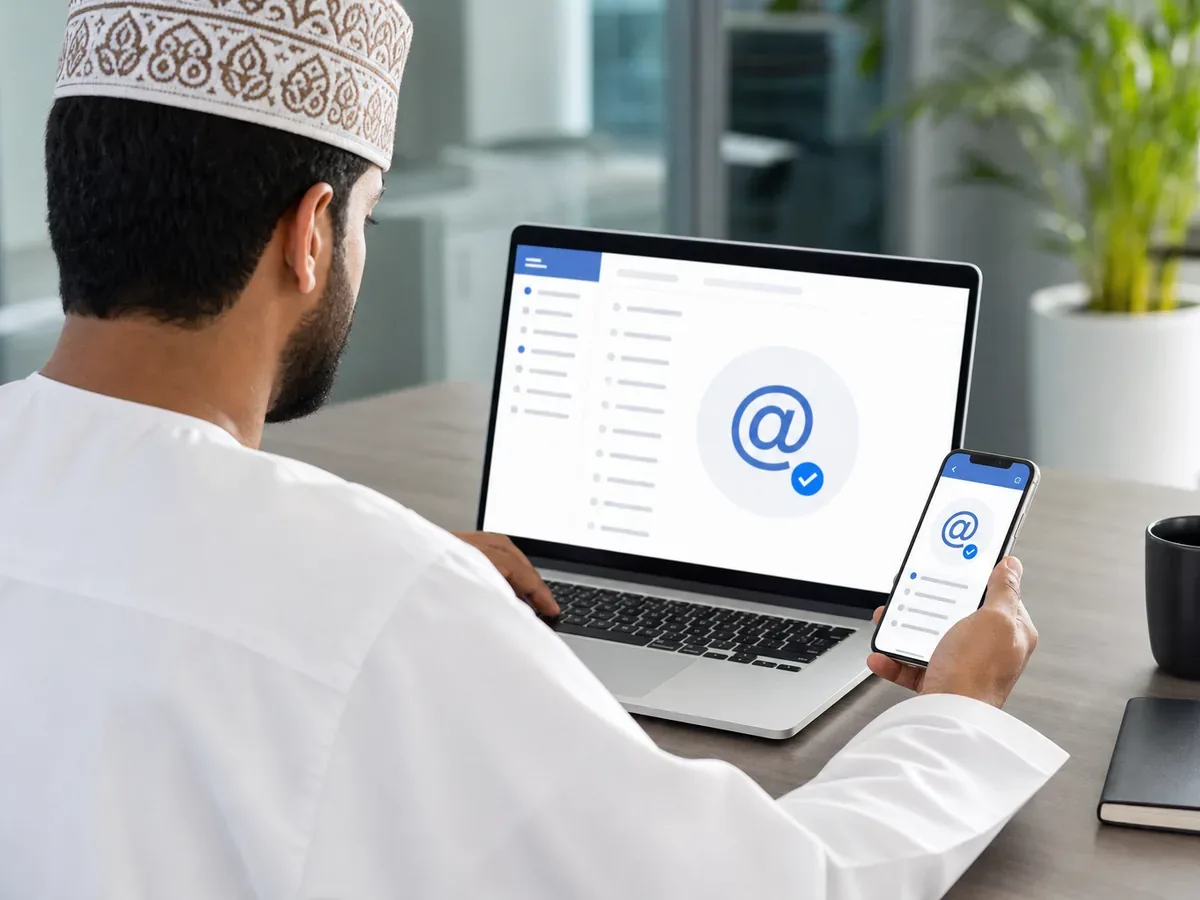
At its simplest, this is a real mailbox for each person, at your own address: ahmed@yourcompany.com, sales@yourcompany.com, and so on. Each mailbox comes with plenty of storage, so nobody has to delete mail to make room, and it works the same on a laptop, a phone, and webmail in a browser.
Beyond the personal mailboxes, most businesses want a few shared addresses that are not tied to one person. Something like info@, accounts@, or support@ can land in front of whoever should answer it, so a message never sits unread because one colleague is on leave.
Because a business is more than a pile of separate inboxes, we also set up shared calendars and shared contacts for the team. Everyone can see the same meeting schedule, book a room without double-booking, and work from one company address book instead of contacts scattered across personal phones. It is the difference between a group of individual accounts and something that actually works like a company.
We can set you up on a business platform such as Microsoft 365 or Google Workspace, or a hosted mail service, and we help you pick the one that fits how you already work rather than pushing a single answer.
Reliable mail, from a partner who is here
Email is the one system a business notices the second it stops. A morning where nothing sends, or where messages bounce back, means missed orders and a phone that starts ringing. The point of proper business email hosting is that it does not just stop. Mail runs on a business-grade service built to stay up, not a free account that can suspend you with no warning and no one to call.
When something does need attention, being local matters. We are based in Muscat and work in person across Oman, so if your email needs setting up or fixing, you are dealing with a partner who answers on WhatsApp and can come in when it helps. For businesses in the wider GCC, we handle the same work remotely. Email hosting also sits alongside the rest of your setup, so the same team that runs your managed IT support keeps your mail healthy too, and can host it on your own servers and virtual machines where a business needs to keep everything in house.
Stopping spam, phishing and people forging your name
Email is the number one way businesses get attacked. Most trouble arrives as a message: a fake invoice, a login page that steals a password, a note that looks like it came from the manager asking for a transfer. Good hosting filters the obvious spam and the dangerous phishing before it reaches anyone, and we turn on multi-factor authentication so a stolen password alone is not enough to open a mailbox. If you want the wider picture of protecting devices and accounts, our cybersecurity work covers it, since email is the front door.
There is one more risk that catches businesses out, and it is worth understanding in plain words. Scammers can send email that looks like it came from your domain, so a customer receives a convincing message that appears to be from you when it is not. Three settings stop this, and they live in your domain's DNS records:
- SPF is a public list of who is allowed to send email for your domain. If a message comes from somewhere not on the list, the receiving mail server can treat it as suspicious.
- DKIM adds an invisible signature to every genuine message, so the receiver can check the mail really came from you and was not tampered with on the way.
- DMARC ties the two together and tells other mail servers what to do with a message that fails the checks, such as reject it, and it can report attempts to forge your name.
Set up correctly, these three make it far harder for anyone to impersonate your business by email, and they also help your genuine mail reach the inbox instead of the spam folder. We configure them as part of setting up your email, and check they are actually working rather than just switched on.
Moving across without losing a single email
The reason businesses stay on an address they have outgrown is fear of losing years of mail in the move. That fear is fair, and it is our job to remove it. When we migrate you from an old or free provider, we copy your existing mail, folders, calendars, and contacts across first, and only switch the live delivery over once the new mailboxes are ready. Done properly, your history comes with you and there is no day where mail vanishes.
We plan the change to avoid downtime, usually shifting the final cut-over to a quiet time so the business barely notices. Old messages stay searchable, your address stays the same if you are keeping your domain, and everyone carries on. If you are moving from a personal Gmail or a shared hotmail account, this is also the moment the business finally takes proper ownership of its own mail.
How we set you up
We do not sell a mailbox and disappear. The first step is a free look at how your business handles email today: what addresses exist, where they live, and what is causing trouble. From there we pick the platform that fits with you, move your existing mail across, set the DNS records that protect your name, turn on multi-factor authentication, and configure each person's computer and phone so nothing is left half-done. New staff get a mailbox quickly, and when someone leaves you can close or hand over their account cleanly instead of chasing a password nobody wrote down. Email hosting is often the first piece of a wider end-to-end office setup, and we help you plan it as part of your IT strategy rather than a box bought in a hurry. You are quoted after the free assessment, so you know what you are getting before anything changes.
Your accounts and data stay yours
Underneath all of it is a principle we hold to across everything we do: you own your accounts and your data. The domain is registered to your business, the mailboxes belong to the company, and if you ever decide to run it yourself or move on, you can take your mail, contacts, and calendars with you. There is no lock-in dressed up as a service, and no account held hostage by a vendor you have outgrown. Your email also sits naturally alongside your business phone system, so the whole way your customers reach you stays with one local partner.
Talk to us
Tell us how your business handles email today, whether that is a scatter of free accounts or an older setup that keeps causing trouble, and we will recommend a clean way forward and quote it after a free assessment. WhatsApp +968 9097 1795 or email contact@budtech.om. Professional email on your own domain, set up, secured, and kept running by a team in Muscat, as part of the IT support behind your whole business.
Related reading
Frequently Asked Questions
Why not just use a free Gmail or Hotmail address for the business?
A free address looks less professional to customers, and more importantly you do not fully control it. It usually sits under one person's personal login, so the business can lose access when that person leaves or the account is locked. Email on your own domain belongs to the company and matches your brand.
Will moving to a new provider mean I lose my old emails?
No. We copy your existing mail, folders, calendars and contacts to the new mailboxes first, and only switch live delivery once everything is in place. Your history comes with you and there is no gap where mail disappears.
What are SPF, DKIM and DMARC, and do I need them?
They are three settings in your domain's DNS that stop scammers sending email that looks like it came from you. SPF lists who may send for your domain, DKIM signs your genuine mail, and DMARC tells other servers to reject forgeries. We set them up and check they work, and they also help your real mail reach the inbox.
Can my team share a calendar and contacts?
Yes. We set up shared calendars so everyone sees the same schedule and can book without clashing, and a shared company address book so contacts are not stuck on personal phones. Shared addresses like info@ or accounts@ can also reach whoever should answer them.
How much mailbox storage do we get, and can I read email on my phone and laptop?
The exact storage depends on the platform and plan we choose with you, sized to how your team works and confirmed after the free assessment, and it is enough that nobody needs to delete mail to make room. It syncs across laptop, phone and webmail, and we set it up on the devices and apps your team already uses.
If we ever leave, do we keep our email and data?
Yes. The domain is registered to your business and the mailboxes belong to the company. If you decide to move on or run it yourself, you can take your mail, contacts and data with you.
Is this secure enough to stop the scam emails pretending to be us?
Good hosting filters spam and phishing before it reaches your team, and we turn on multi-factor authentication so a stolen password alone cannot open a mailbox. SPF, DKIM and DMARC then make it far harder for anyone to forge your domain. For wider protection across devices and accounts, our cybersecurity work goes further.