
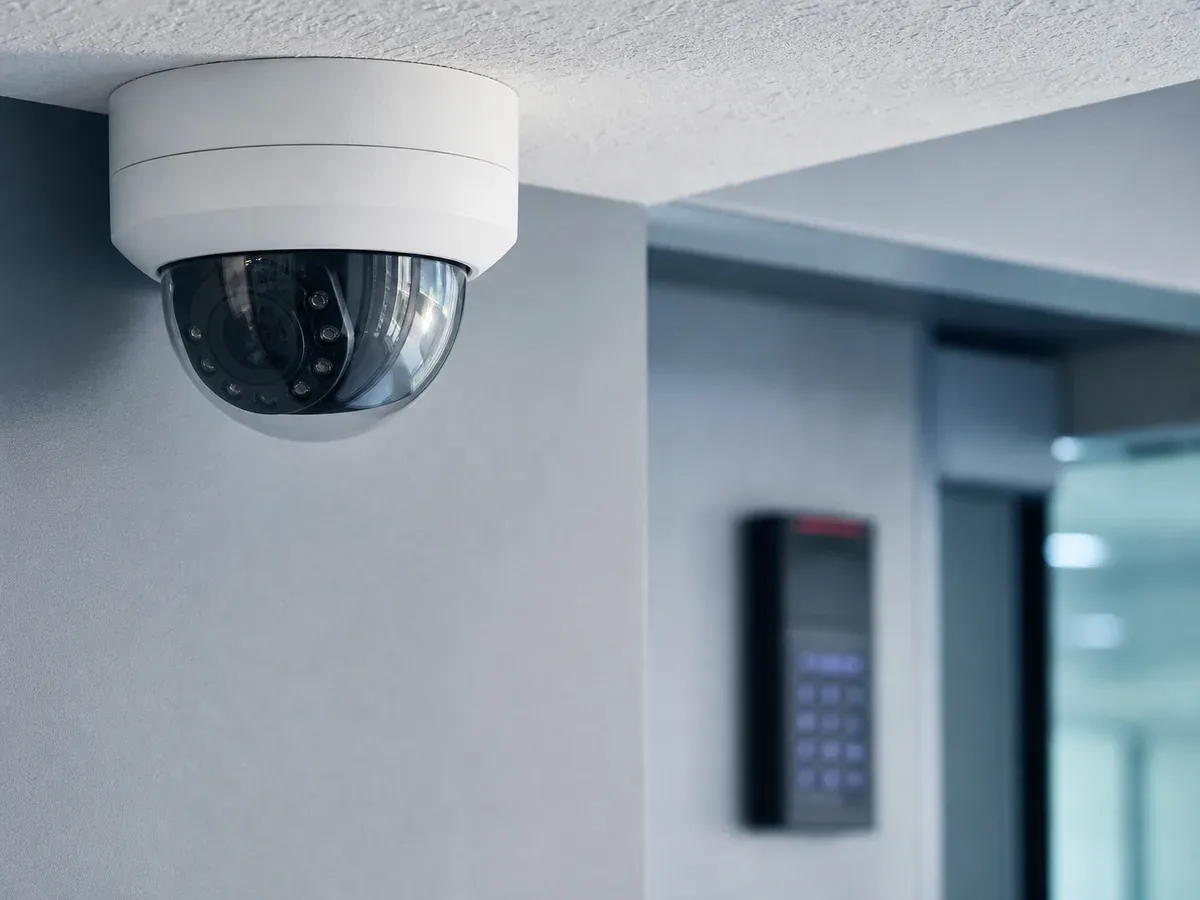
CCTV and access control for a small office in Oman
Why a small office in Oman is safer when cameras and door access work together, and what a right-sized, affordable setup actually looks like.
Cameras or door access: a small office needs both
If you run a small office in Oman and you are starting to think about security, the first question is usually simple. Do we put up a few cameras, or do we fit a better lock on the door? The honest answer is that CCTV and access control do two different jobs, and a small office is a lot safer when they work together rather than on their own.
Cameras record. They give you a picture of what happened, who came in, and when. Access control does the opposite job. It decides who is allowed through the door in the first place, and it keeps an honest record of every entry. One watches, the other controls. Put them on the same door and you cover both halves of the problem, which is why the two are usually planned together as part of a proper CCTV setup.
You do not need a large budget or a wall of screens to get there. A small team can get most of the benefit from a handful of well-placed cameras and a single reader on the main door. The trick is putting the right kit in the right places, not buying more of it.
What each part actually does
It helps to be clear about what you are buying, because the two systems settle different worries.
CCTV is your record. If something goes missing from the store room, if a customer disputes what happened at the counter, or if there is any question about an incident after hours, the footage settles it. Good cameras also discourage trouble before it starts, because most opportunistic theft goes looking for the easy target with no camera on it.
Access control is your gatekeeper. Instead of handing out keys that get copied, lost, or kept by staff who have already left, each person gets a card, a fob, or a PIN. You decide who can open which door and at what hours. When someone leaves the company, you switch off their card in a minute instead of changing the locks. And every time a door opens, the system notes who opened it and when.
Setting hours is part of the point. A cleaner's card can work only in the early morning, and the main door can lock itself to cards after closing, so a door someone forgot to bolt is no longer a risk sitting open all night.
A right-sized setup for a small office
Here is what a sensible setup looks like for a small office or shop in Muscat, without over-buying.
Start with a few cameras where they earn their place:
- One on the entrance, so you have a clear face shot of everyone who comes and goes.
- One over the till or cash area, where money changes hands and most disputes happen.
- One on the back door or store room, the quiet spot that gets forgotten and is often where losses start.
That is often three or four cameras, not a dozen. In a small office, a bigger camera count usually means more arguments about blind spots and a heavier bill, not more safety.
Then add one access-control reader on the main door. That single reader covers the door everyone uses, replaces the shared key, and gives you the entry record. If you have a second sensitive door, say a server room or a stock room, that is the natural place for a second reader later on.
The cameras record to a small box on site, usually a network video recorder tucked in a cupboard or the server area. That box decides how many days of footage you keep, so it is worth agreeing on a sensible window, often a couple of weeks, and making sure older clips are overwritten in turn rather than lost the day you need them. Most setups also let you check any camera live from your phone, which is the feature small-office owners use most, since it means glancing at the shop from home on a quiet evening.
Both parts can share the same cabling run and the same install visit, which keeps the cost down. If you want a sense of the numbers before you commit, our guide to what CCTV installation costs in Oman walks through what drives the price.
One record, and staff attendance for free
Because every card tap is already logged, the same access-control hardware can double as a simple time-and-attendance record. When staff badge in and out on the main door, you get an honest log of who arrived and when, without buying a separate machine or asking anyone to sign a sheet.
For a small team this is a quiet win. Payroll questions get easier to answer, and you are not leaning on memory or goodwill for who was in on a given morning. It is the same hardware you were fitting anyway, doing a second useful job.
The practical wins for the business
Put together, a small office gets three things it did not have before.
The first is deterrence and proof. Visible cameras make your office a less attractive target, and when something does happen, you have a recording instead of an argument. The second is control over the door. You decide who gets in and when, and you can shut off access the moment someone leaves, without the cost and hassle of re-keying. The third is an honest record of comings and goings, which matters for everything from an after-hours alarm to a payroll query.
None of this needs a security guard on the payroll or a control room. For most small offices it runs quietly in the background and only asks for your attention when you actually need the footage or the log.
Keeping it simple and affordable
The most common mistake a small business makes here is buying too much. A big camera count, screens nobody watches, and a system so complicated that no one on the team can use it. That money is better spent on fewer, better-placed cameras and a clean install.
Keep it simple. Cover the three spots that matter, put one reader on the door everyone uses, and make sure the footage is actually recording and stored somewhere safe. Ask for kit you can understand and expand later, so a second branch or a new back door does not mean starting over.
It also helps to have one team own the whole thing, so the cameras, the door, and the network they sit on all answer to the same phone number. That is how we usually fit it, as part of looking after a business's IT and security together rather than leaving you to chase three separate vendors. When it is time to plan the cameras themselves, our security camera systems page covers the options in more detail.
The honest takeaway
For a small office in Oman, CCTV and access control are not competing choices. Cameras give you the record and the deterrent, access control gives you command of the door and a log of who came through it, and the same visit can set up both. Buy for the few spots that matter, keep it simple enough that your team will actually use it, and you get real security without a corporate budget. If you want the doors and the cameras planned together rather than bought separately, that is what a free site survey is for.
Get a quote for your setup

Amirh. Safavi
Founder
Amirh. Safavi is the founder of BudTech LLC, an IT and software company in Muscat founded in 2026, and writes its guides to business IT in Oman.
More from Amirh. Safavi